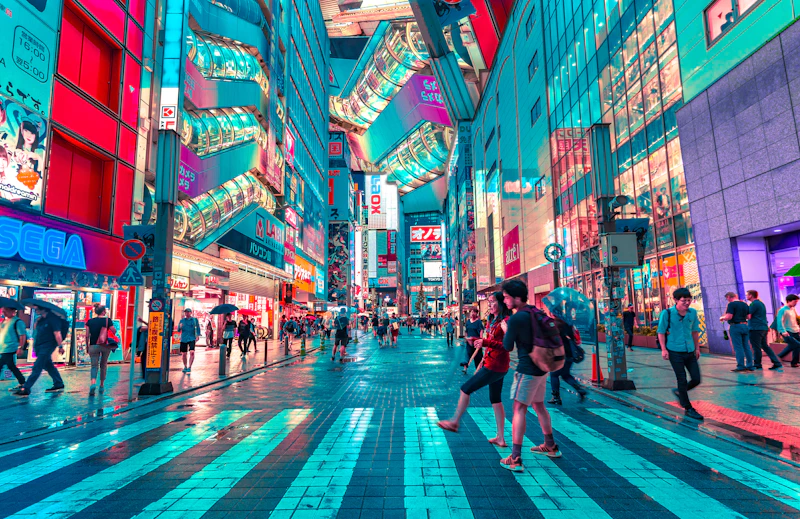
Ginza has been Tokyo's most prestigious commercial district since the Meiji era, when the government rebuilt it after an 1872 fire in brick and gaslight — a Western-style commercial quarter that announced Japan's modernization to the world. Today the main boulevard (Chuo-dori) is lined with flagship stores of every major international luxury brand plus Japan's own department store institutions, and the side streets contain some of Tokyo's most concentrated gallery and arts spaces. It is also, on the whole, more interesting than it looks from the outside.
The Architecture
Walking the main strip and the blocks immediately around it is an architectural tour of major international design firms' Tokyo work:
- Hermès Ginza (Renzo Piano, 2001): The glass block facade that changes character through the day as light shifts.
- Prada Aoyama is technically in Aoyama, but the Prada Ginza building itself is notable.
- Tokyo International Forum (Rafael Vinoly, 1996): A 60-meter-tall glass hall visible from Yurakucho Station. Free to enter and walk through; the main hall feels like the interior of a ship.
- Ginza Six (2017): The newest large-scale complex, with Kengo Kuma's facade treatment and Damien Hirst sculpture in the atrium. The basement food hall is worth visiting for the quality of bento and prepared foods.
The Galleries
Ginza has one of the highest concentrations of commercial art galleries in Tokyo — more than 50 gallery spaces within walking distance of the main strip. Many are in the upper floors of office buildings (take the elevator to floors 5–8 in any of the older commercial buildings on the side streets). Entry to most is free.
The Maison Hermès Forum (8th floor, the glass block building) has rotating exhibitions of contemporary art and design — consistently one of the more thoughtful gallery programs in Tokyo. The Ginza Graphic Gallery in the DNP Ginza Building has design-focused shows. The Shiseido Gallery (basement of the Shiseido headquarters) has been operating since 1919 and hosts conceptual and performance art.
Department Stores
The Ginza Mitsukoshi and Matsuya department stores are the district's anchor institutions. Unlike their Shinjuku equivalents, these have a more refined, less frantic character. The basement food halls (depachika) are among Tokyo's best for high-end bento, confections, and prepared foods. The Matsuya Ginza basement in particular has an excellent selection of Japanese confectioners and tea brands.
Food in Ginza
Lunch
Several Michelin-starred restaurants in Ginza offer significantly more affordable lunch sets than their dinner menus. A restaurant charging ¥30,000 for dinner may offer a ¥5,000–8,000 lunch course with similar technique applied to the season's ingredients. This is the recommended way to access Ginza's dining scene on a moderate budget.
Sukiyabashi Jiro Honten: The most famous sushi restaurant in the world (the documentary Jiro Dreams of Sushi) is in the basement of the Tsukamoto Sogyo Building. It essentially cannot be booked without a hotel concierge or connections — worth knowing about, not worth planning around.
More accessible: Kyubey (established 1936, excellent traditional Edomae sushi, lunch counter available), Kyoto Tempura Yoshikawa's Tokyo outpost (counter tempura lunch), and various French and Japanese restaurants on the side streets that have good-value weekday lunches.
When to Visit Ginza
Daytime (weekday): The galleries, department stores, and restaurants are at their best. Less crowded than weekends and the lunch offerings are full and fresh. Weekend pedestrian street: On Saturdays, Sundays, and public holidays, Chuo-dori is closed to vehicles from noon to 5pm (April–September) or 4pm (October–March), becoming a pedestrian promenade. The atmosphere is pleasant but crowded. Evening: The district empties somewhat after 8pm — most galleries and department stores close by 8pm, leaving the restaurants. This creates a more intimate feel, especially in the side streets.
Combining With Nearby Areas
Ginza is adjacent to: Tsukiji outer market (10-minute walk, excellent for morning sushi and seafood), Yurakucho (one subway stop or 10-minute walk, has a covered pedestrian area with good izakaya underneath the train tracks), and Tokyo Station (5 minutes, for Shinkansen connections and the Gransta food market basement).