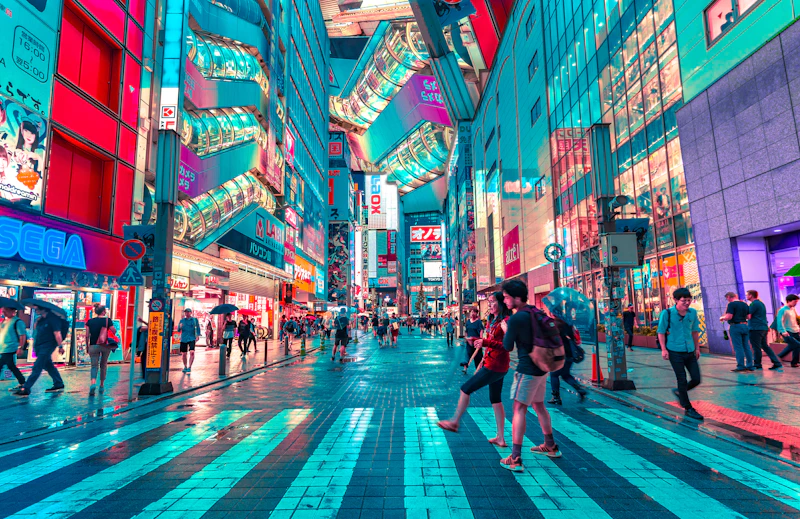
Roppongi: More Than Just Nightlife
Roppongi has a reputation built on its nightlife, and that reputation is earned—it's one of Tokyo's most international and active bar districts. But dismissing Roppongi as only a nightlife destination misses some of the city's best art museums, architecture, and dining. This guide covers both sides.
The Art Triangle Roppongi
Three world-class art museums are within 10 minutes' walk of each other in Roppongi, collectively known as the Art Triangle.
Mori Art Museum on the 53rd floor of Mori Tower holds rotating contemporary exhibitions of consistently high quality. The adjacent Tokyo City View observation deck (tickets bundled with museum admission) offers arguably the best 360° view of Tokyo. Open until 10pm on Tuesdays and Fridays—visiting at sunset and staying into the night is the ideal approach.
National Art Center Tokyo is architecturally stunning—a wave-like glass facade designed by Kisho Kurokawa. It hosts multiple simultaneous exhibitions across 14 galleries. No permanent collection, so check the current schedule. The building alone is worth visiting for architecture enthusiasts.
Suntory Museum of Art in Tokyo Midtown focuses on Japanese traditional arts and crafts—lacquerware, ceramics, textiles, and glass. Smaller and quieter than the others, but the exhibitions are beautifully curated.
An "Art Triangle Roppongi" combined ticket is available at a discount—worth it if you plan to visit more than one.
Tokyo Midtown and Roppongi Hills
Roppongi has two major mixed-use complexes that anchor the district. Tokyo Midtown (northeast of the main intersection) includes the Suntory Museum, high-end retail, a garden with seasonal illuminations, and the excellent 21_21 Design Sight design museum founded by Issey Miyake and Tadao Ando. Roppongi Hills (southeast) contains Mori Tower, the Mori Art Museum, a Grand Hyatt hotel, a spider sculpture by Louise Bourgeois, and a concentration of restaurants and bars. Both are worth exploring on foot.
Nightlife: What to Expect
Roppongi's bar scene is the most international in Tokyo. Club venues like Muse, V2 Tokyo, and SuperDeluxe (for experimental music) attract a mix of expats, tourists, and Tokyo residents. The main strip around Roppongi Crossing has everything from Irish pubs to cocktail bars to live music venues.
The area is generally safe, but touts outside bars and clubs can be persistent—a polite but firm "daijoubu desu" (no thank you) usually ends the exchange. Stick to clearly signed establishments and avoid unmarked venues offering unusually cheap entry deals. Like any international nightlife district, normal urban common sense applies.
Dining in Roppongi
Roppongi has strong restaurant options across all price points. The Grand Hyatt houses several excellent restaurants. For more approachable options, the side streets off the main drag have izakayas and small eateries that serve the large expat community living in the neighborhood. The food hall in the basement of Roppongi Hills is good for a casual lunch.
Ukai Tofuya Roppongi is one of Tokyo's most beautiful restaurants—a traditional wooden building with a garden, serving refined tofu-based kaiseki cuisine. It's on the expensive side (¥6,000–12,000 per person) but provides an experience hard to find in such central Tokyo locations.
Getting to Roppongi
Two subway lines serve Roppongi directly. The Tokyo Metro Hibiya Line (Roppongi Station, exit 3 for Roppongi Hills; exit 1a for Mori Tower) and the Toei Oedo Line (Roppongi Station, exit 7 for Tokyo Midtown) both run frequently. From Shibuya, the Hibiya Line takes about 5 minutes. From Shinjuku, the Oedo Line takes about 13 minutes. Taxis are abundant at Roppongi Hills and Tokyo Midtown taxi ranks.
When to Visit
Roppongi by day is calm and excellent for museums. By night (especially Friday and Saturday) the character shifts completely toward entertainment. For a single visit that captures both, arrive around 4–5pm, visit Mori Art Museum and City View around sunset, eat dinner in Roppongi Hills, and explore the nightlife area afterward if that interests you. The neighborhood's concentration of quality in a small area makes this kind of combination evening very doable.