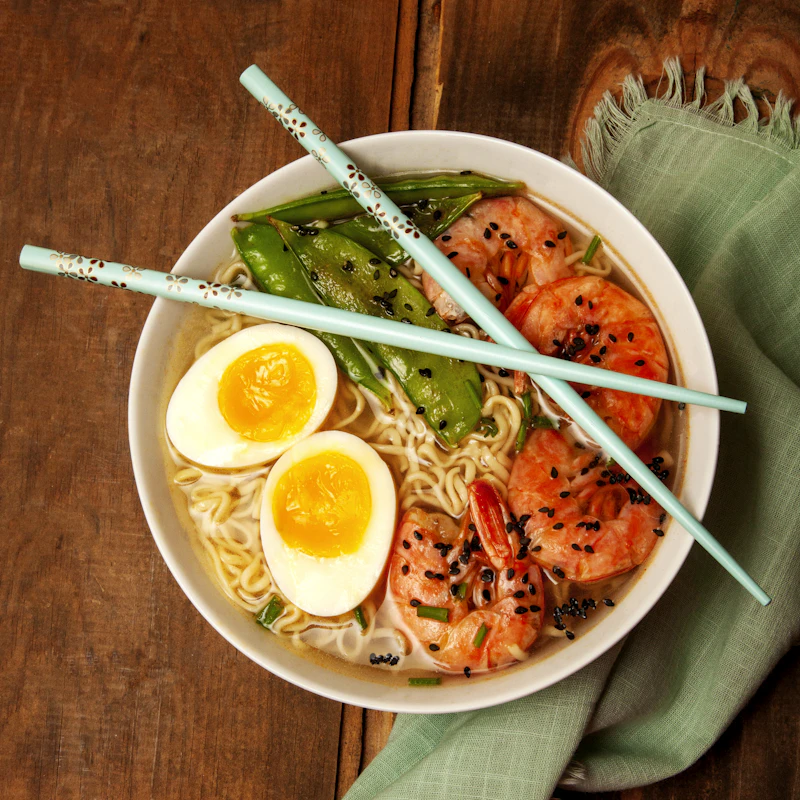
Of all Japan's ramen styles, tonkotsu is perhaps the most extreme — a bowl of milky-white, intensely rich broth made from pork bones boiled for hours until they release every drop of collagen and marrow. Born in Fukuoka, it has conquered ramen shops worldwide.
The Origins of Tonkotsu
Tonkotsu ramen was born in Kurume, Fukuoka prefecture, in the late 1930s. Legend has it that ramen was accidentally left boiling too long, producing the cloudy, rich broth that defines the style. From Kurume, it spread to Fukuoka city (Hakata), where it evolved into what most people think of as tonkotsu today — a slightly thinner, more refined version served with ultra-thin straight noodles.
What Makes the Broth
Authentic tonkotsu broth requires boiling pork bones (trotters, femur bones, and neck bones) at a vigorous rolling boil for 8–18 hours. This extended cooking emulsifies the fat and collagen into the broth, creating its characteristic creamy-white color and thick, unctuous texture. The broth is finished with tare (seasoning concentrate) — typically shio (salt) in Hakata style — and fragrant oils.
Hakata Ramen: The Classic Expression
Hakata ramen (Fukuoka's version) is served with extremely thin, straight noodles with a firm texture. Toppings are minimalist: chashu pork, green onions, sesame seeds, pickled ginger, and often a sheet of nori. The key feature is kaedama — you can order additional noodles (¥100–200) to add to your remaining broth when your bowl is nearly empty. This practice assumes you'll want to stay for more.
Regional Tonkotsu Variations
Kurume style is the original — darker, more intense, almost opaque broth with a deeper pork flavor. Nagahama style (Fukuoka port area) is slightly lighter and faster to prepare, popular with market workers needing quick meals. Kumamoto style adds chicken broth to the pork base and tops the bowl with black garlic oil (mayu) and corn. Kagoshima style mixes tonkotsu with chicken broth for a lighter result.
Tokyo Tonkotsu
Tokyo chains like Ichiran and Ippudo brought Hakata-style tonkotsu to the capital. Ichiran is particularly famous for its solo dining booths — individual stalls with bamboo curtains where you eat facing a wall, customizing your broth richness, noodle firmness, and spice level on a paper form. It's an experience as much as a meal.
What to Order
When ordering tonkotsu ramen, you'll often be asked about koshi (noodle firmness) — from very soft (yawa) to extra firm (kata-kata). Order kata (firm) or barikata (very firm) for the authentic Hakata experience. For richness, ask for koi-me (rich) broth. Most shops offer free toppings like sesame seeds and ginger at the counter.
The Best Areas to Eat Tonkotsu
Fukuoka's Nakasu area has numerous ramen shops open late into the night. The yatai (open-air food stalls) along the Naka River are iconic — small red-lantern stalls where you sit at a counter eating ramen under the night sky. In Tokyo, Shin-Yokohama Ramen Museum has multiple regional styles under one roof, including Fukuoka-style tonkotsu.
Tonkotsu ramen is a commitment — rich, heavy, and deeply satisfying. Don't eat a large meal beforehand, arrive hungry, and don't rush. The thick broth deserves full attention.