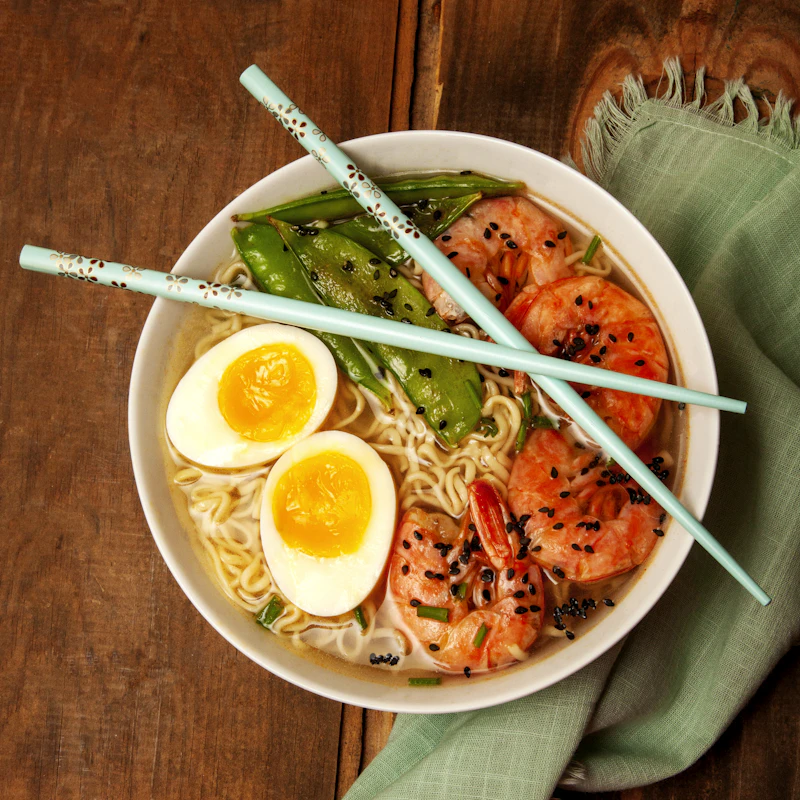
Ask a Japanese person their noodle preference and you'll get a passionate opinion. Ramen, udon, and soba form Japan's noodle trinity — three completely different experiences often available within steps of each other. Understanding what distinguishes them helps you make better choices and appreciate each more deeply.
The Noodles Themselves
Ramen noodles are wheat-based, made with alkaline water (kansui) that gives them a yellow tint, chewy texture, and distinctive flavor. They range from thin and straight (Hakata style) to thick and wavy (Tokyo style). Udon are thick, white, chewy wheat noodles made simply from wheat flour, salt, and water. Their mild flavor makes them excellent vehicles for delicate dashi-based broths. Soba are thin, brownish-gray noodles made from buckwheat flour — earthier, slightly more complex in flavor, and gluten-free in their pure form (though most contain wheat as a binder).
Ramen: The Complex One
Ramen's broth typically requires 8–18 hours of cooking, building complex layers from bones, aromatics, and tare (seasoning concentrate). The four main styles — tonkotsu (pork bone), shio (salt), shoyu (soy sauce), and miso — represent dramatically different flavor profiles and regional traditions. Ramen is the most recently developed of the three (20th century popularization, with Chinese noodle origins) and the most globally recognized.
Udon: The Comforting One
Udon broth is simpler but no less sophisticated — a clear dashi made from kombu and katsuobushi (dried bonito flakes), lightly seasoned with mirin and soy sauce. The broth showcases the dashi quality rather than hiding behind complex seasonings. Udon excels in extreme simplicity: kake udon (plain broth) lets you taste the noodles themselves. Regional variation is enormous — Sanuki udon from Kagawa prefecture (hand-pressed, extremely firm) differs dramatically from soft Kyoto-style udon.
Soba: The Refined One
Soba has a philosophical dimension other noodles lack — in Japan, it's associated with self-discipline, minimalism, and appreciation for seasonal ingredients. Buckwheat harvested in autumn makes the best new-crop soba (shinsoba). Serious soba restaurants serve only soba, take pride in minimal seasonings that don't compete with buckwheat flavor, and may close for the season when their flour runs out. Cold soba with dipping sauce reveals the noodle's flavor best; hot soba in broth is warming comfort.
Price Points
All three provide excellent value compared to equivalent Western restaurant meals. Ramen: ¥800–1,500 for a bowl. Udon: ¥400–1,000 (cheaper at counter-service udon chains like Marugame Seimen). Soba: ¥800–2,500+ at specialist restaurants where quality buckwheat justifies premium pricing.
When to Eat What
Ramen is acceptable any time but particularly satisfying as a late-night meal after drinking or during cold weather. Udon is ideal for lunch or as a warming meal in any season. Soba has traditional associations with year-end (toshikoshi soba — crossing-year soba) and is considered appropriate for more refined dining occasions. On New Year's Eve, nearly every Japanese person eats soba by midnight.